Shoppers move between online and in-store without thinking about it. The systems behind those channels usually do not keep up. Inventory falls out of sync. Returns get stranded in the channel they did not start in. The context a customer builds online disappears the moment they walk into a store.
That is the gap we close with our partner Rise.ai.
CQL unifies commerce operations for enterprise retailers across every channel. Rise.ai runs the loyalty and retention layer that keeps the customer experience consistent wherever people engage with a brand. Together, the two of us help retailers manage the growing complexity of modern commerce and close the touchpoints where omnichannel most often breaks down.
Rise.ai recently sat down with Mike Riess, our VP of Unified Commerce and Managing Director of EMEA, to talk through where omnichannel falls apart as retailers scale, what it takes to fix it, and how to keep commerce connected across every touchpoint. Here is what came out of that conversation.
Omnichannel still feels broken to customers
Harvard Business Review puts a number on it: 73% of shoppers use more than one channel on the way to a purchase. Most retailers still trip over the same few problems:
- Someone buys online and cannot return the item in a store.
- A gift card bought at the register does not work on the website.
- The site says a product is in stock, but the associate on the floor cannot find it.
Mike says the channels are not the problem:
“Omnichannel doesn’t break because the channels are hard. It breaks at the cracks brands create for themselves: tools that were never built to talk, bolted together, and business processes teams are not willing to bend.”
Those cracks open wherever information has to cross from one system, team, or channel to the next.
The root cause is a Frankenstein stack
Most retailers run an ecommerce platform, a POS, loyalty tools, returns software, and marketing systems that were never meant to act as one. They may connect on paper. Underneath, inventory, customer identity, orders, returns, and rewards still sit in separate silos.
The bigger the retailer, the worse it gets. The breakdowns cluster in three places.
- Inventory drift. The website shows a product as available, but no one can find it in the store. Ship-from-store and BOPIS lose credibility fast. As Mike puts it, “Customers feel the pain with wrong stock, refused returns, and orders associates can’t find.”
- Lost customer context. Browsing history, loyalty balances, purchase intent, and store credit disappear the second a shopper crosses between online and the store.
- Data that never reaches marketing. What happens in-store rarely makes it back to the systems running email, CRM, and personalization. Campaigns get less relevant, and the experience gets harder to coordinate.
The data is already being collected. The problem is making it usable across channels, so what a brand learns online still counts in the store, and what happens in the store still counts online.
How Rise.ai connects the customer experience
Done right, unified commerce should be invisible to the customer. The plumbing can be complicated. The experience should feel the same no matter where someone shops.
Picture it. A customer spots an item online, confirms a nearby store has it, and picks it up that afternoon. Weeks later they return it at a different location, no receipt needed, because their purchase history is available across the business. Their information stays current and consistent whether they are on the site, in a store, or in the app.
Rewards, store credit, and gift cards are where this breaks down most often. People expect a credit earned in one channel to show up and work in another. When it does not, the whole experience feels broken.
Rise.ai handles this with a unified digital wallet. It pulls store credit, gift cards, cashback, referrals, loyalty, and membership perks into one connected experience, and syncs balances, rewards, and redemption across online and offline touchpoints automatically.
Here is how Mike describes it:
“Modern solutions like Rise.ai enable merchants to have gift cards, store credit, and loyalty work seamlessly across channels. Customers want to see what’s happening with their store credit: how they got them, when they expire, and where they redeemed them. Rise.ai gives them that.”
The numbers back it up. Rise.ai merchants see a 32% repeat purchase rate, an 18% lift in average order value, and a 40% redemption rate.
Rewards are only one layer, though. Even strong loyalty falls over when the commerce foundation underneath is fragmented. Inventory mismatches, split customer profiles, and orders scattered across systems create friction long before a customer ever goes to redeem anything.
That is where CQL comes in.
How CQL fixes the foundation underneath
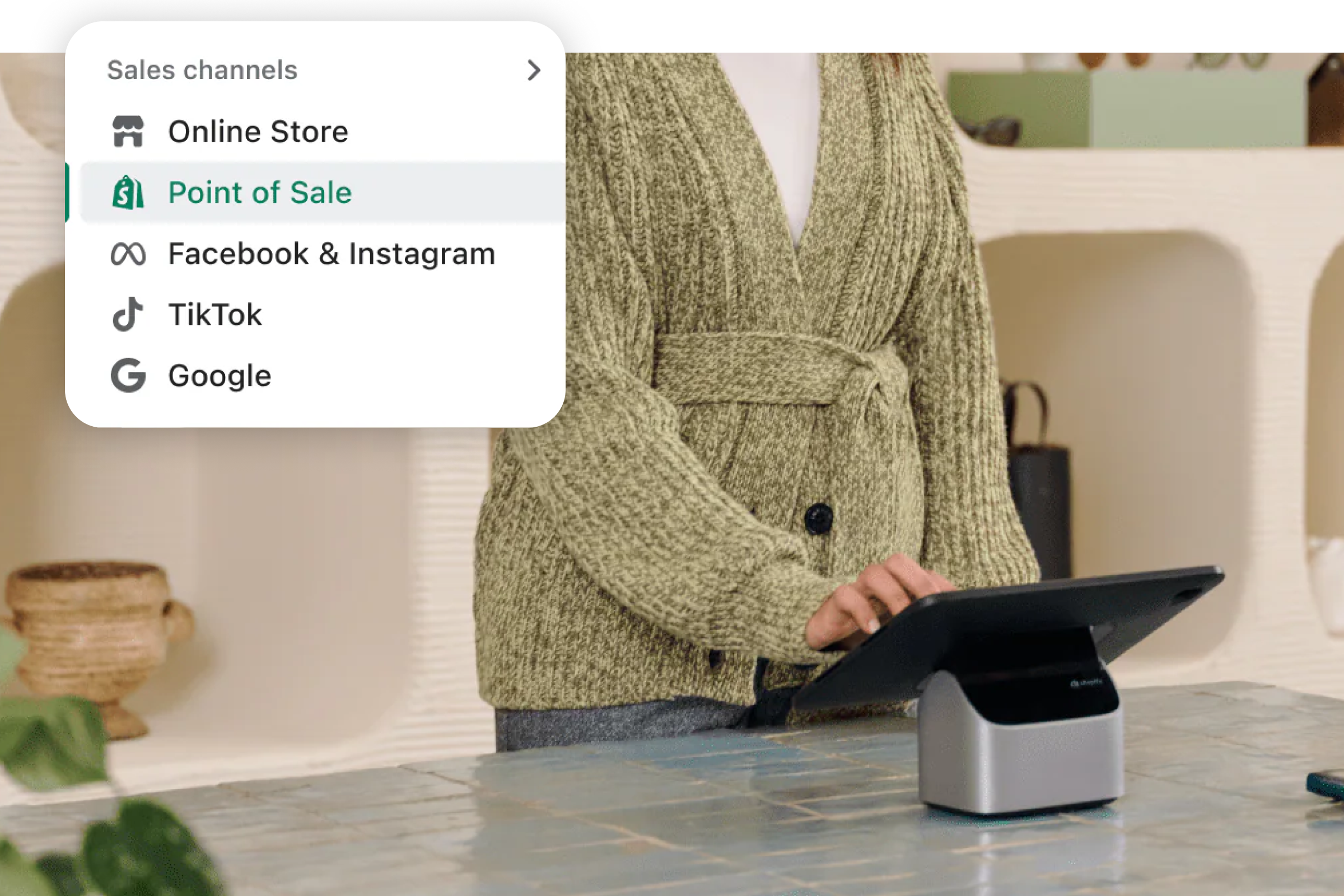
We are a Shopify Platinum Partner with more than 30 years in commerce. Our job is to line up the systems that power omnichannel: ecommerce, POS, fulfillment, customer data, and the integrations that keep them in sync.
When systems stop talking, we find where the friction lives and build around how the business actually runs.
Four foundational systems have to stay aligned for omnichannel to hold together:
- One source of truth for inventory, so the website and the stores never disagree.
- One customer identity, so the same profile follows the shopper across ecommerce, POS, and marketing.
- Order and returns interoperability, so any channel can support an order created in another.
- One shared ledger for rewards, so gift cards and store credit redeem anywhere, no matter where they were earned.
We start with strategy, not software. That means looking at how a retailer’s systems, business processes, and team workflows actually interact, and it usually means talking to the people running day-to-day operations, not just leadership.
Mike sees this constantly:
“It is very common for us to hear one thing from HQ, only for the frontline staff to confess that no one does it that way in real life because it’s too hard or causes other issues.”
Our work runs the length of the commerce stack: platform strategy, ecommerce and POS implementation, integrations across CMS, OMS, PIM, and ERP systems, performance optimization, and ongoing support.
That range matters, because the hardest omnichannel problems almost never sit inside a single system. They show up in the seams, where systems, teams, and processes fail to stay connected.
Build the unified experience customers expect
Unified commerce only works when inventory, customer data, orders, and rewards stay connected across every channel. When they do, retailers get smoother customer experiences, stronger retention, and leaner operations.
Together, CQL and Rise.ai close the gaps that break omnichannel most often. We connect the systems behind commerce. Rise.ai connects the loyalty experience customers actually touch.
For Shopify retailers scaling across physical and digital, that adds up to one consistent experience wherever people shop.
Request a demo to see how CQL and Rise.ai help retailers build more seamless experiences across every touchpoint.