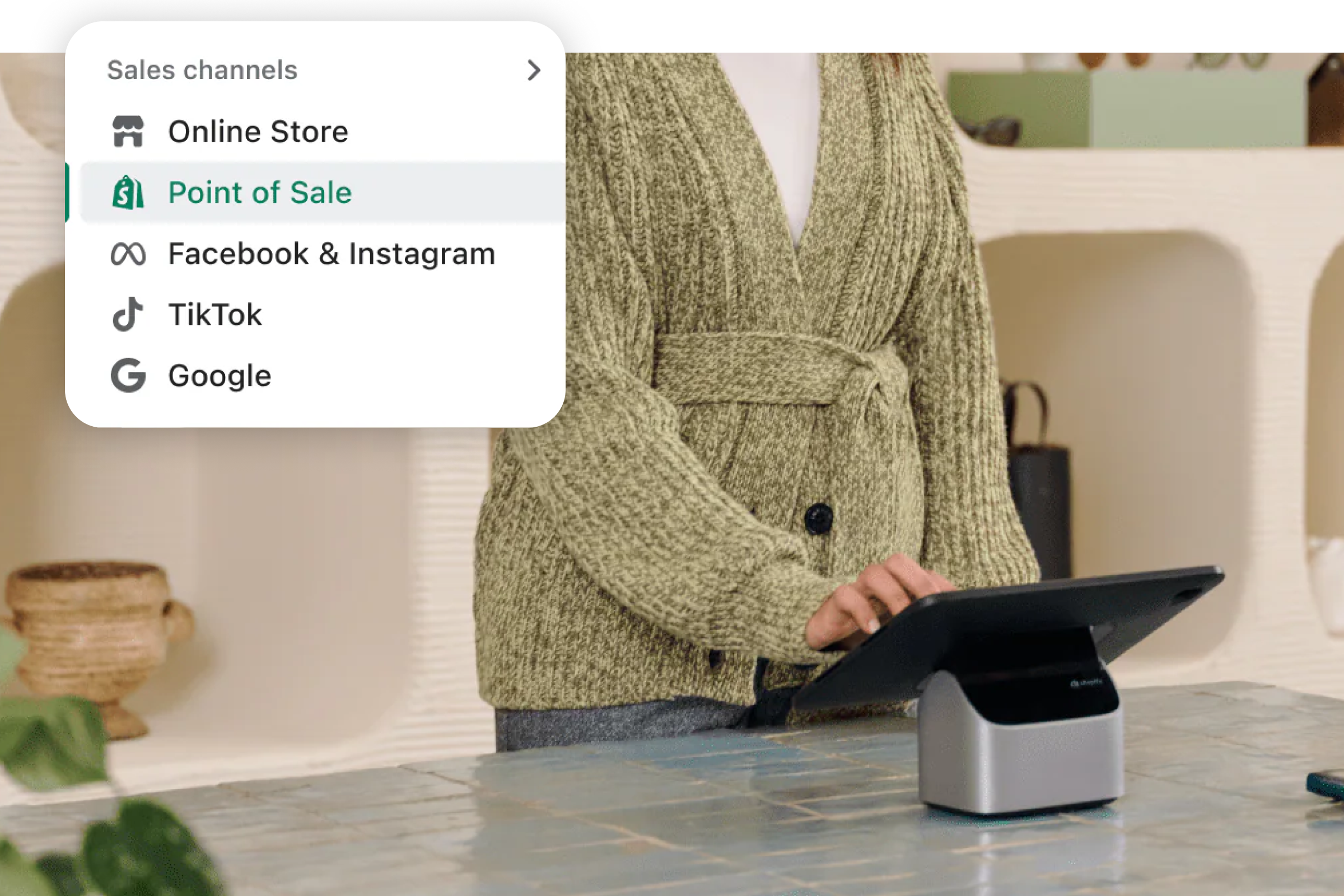
Shopify Editions Spring ’26 is built around three areas: agentic commerce, enterprise-grade capabilities, and point of sale enhancements. Shopify POS is the only unified point of sale and this latest release is where Shopify’s investment in POS really shows: shorter retail checkout lines, connected online and in-store fulfillment, and tooling built for larger, more complex businesses. Shopify is pushing your products into AI shopping experiences automatically, with new tools to track and optimize that performance.
This article will highlight the top new features in Shopify Spring Editions 2026, and break down the enhancements into 3 categories – Ecommerce (Online), POS (Retail), and Unified Commerce.
The Highlights of Shopify Spring Editions ’26:
- Shopify is now getting your products in AI channels automatically. By looking at the Agentic Sales Channel you can see performance, sales, and get guidance on how to optimize for even better conversion.
- Run multiple legal entities from a single Shopify store. This is one of the most significant changes in the release. If your business operates retail locations and/or online stores under different legal entities, you no longer need a separate Shopify instance for each one. What previously took a separate instance for each entity can now live under one roof.
- Mixed fulfillment enhancements bring unified fulfillment across online and in stores. Customers can now combine ship-to-home and in-store pickup items in a single order.
- Market-based discounts let retailers run localized promotions by region. No more one-size-fits-all discounting. You can also stack multiple discounts on a single product.
- Faster POS checkout. POS checkout has been rebuilt. Workflows that used to create friction are now quick and intuitive, keeping checkout lines moving even when adding customer information or applying discounts.
- Your store and product details now surface inside AI shopping experiences, so checkout logic, discounts, and inventory rules work across AI platforms with no developer effort. You can convert more AI-originated purchases by giving buyers delivery dates, color swatches, and more right in the conversation.
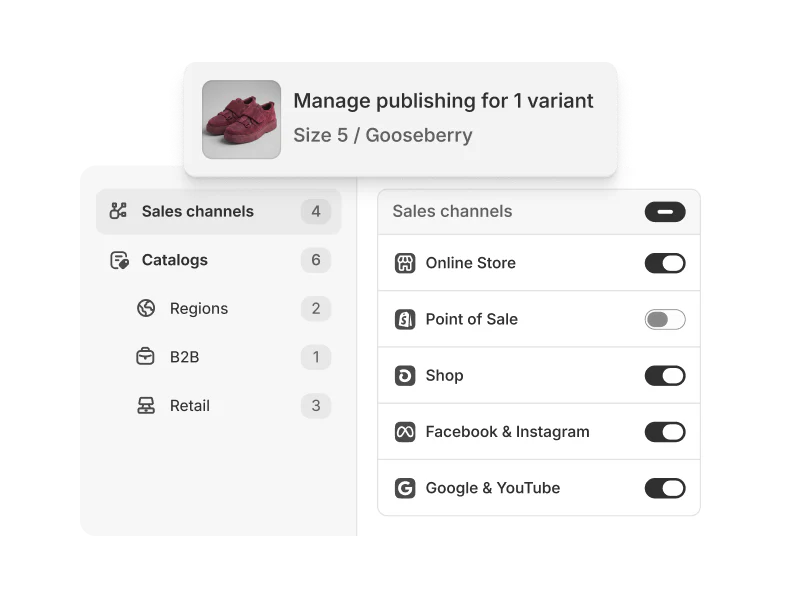
- Variant-level publishing allows you to only publish what’s in stock and save the sale on in-stock items. When a single size or color sells out, you no longer need to hide the entire product.
Online Enhancements
Smarter address suggestions catch bad addresses before they cost you a sale or a re-ship. Branded checkout, accounts, and sign-in pages are now plug-and-play. Your checkout rules and product details carry automatically into AI shopping on Google, Copilot, and soon Meta. The Agentic Sales Channel lets you track performance and optimize conversion across those experiences. 365-day sign-in sessions keep repeat buyers logged in, lifting conversion on return visits. And Rollouts lets you A/B test a new theme, checkout configuration, or customer accounts setup before fully committing.
- Faster, more accurate address suggestions in checkout cut a problem that costs you twice: the sale lost at checkout to a bad address, and the replacement orders, return shipping, and support time when a package ships to the wrong place. Sharper autocomplete and validation stop both before they start.
- Branded checkout and accounts without custom development. Merchants can now easily add logos, colors, and different fonts and these updates apply automatically across checkout, customer accounts, and sign-in pages.
- The Agentic Sales Channel gives you a dedicated view into how your products are performing across AI shopping experiences. Track sales, monitor performance, and get actionable guidance to improve conversion.
- AI conversations and channels. Your checkout customizations, discounts, and inventory rules work automatically inside AI conversations on Google, Copilot, and soon Meta with no developer effort. You can also surface richer product details like color swatches, pricing, and inventory in those channels.
- 365-day sign-in sessions mean repeat buyers aren’t re-authenticating constantly, which lifts conversion and builds richer first-party data. You can also capture marketing consent at sign-in which is a high-intent moment, growing your list compliantly without adding friction to the purchase.
- A/B tests on online store and checkout. Publish a new theme, checkout configuration, or customer accounts setup at a scheduled time or as an A/B test using Rollouts.
Unified Commerce (Online + POS) Enhancements
Discounts flex by region and stack cleanly on a single product, so promotions run without workaround logic or margin leaking into the wrong markets. Orders mix shipping and in-store pickup in a single transaction. Variant-level publishing keeps a sold-out size or color from hiding the whole product, so you save the sale on what’s in stock. And multi-entity management runs separate legal entities from one instance, giving you scale without the operational overhead and complexity.
- Market-based discounts support running localized promotions that maximize margin per market. No more one-size-fits-all discounts leaking into high margin regions. Merchants are able to enable complex promotional strategies, layer employee discounts and loyalty rewards without workaround logic.
- Mixed fulfillment in one order. A customer can buy two items and have one shipped home while they pick the other up in store, handled as a single order rather than split into two.
- Streamlined in-store returns through the Shop App: The Shop App connects the online to in-person journey by showing customers nearby retail locations, and staff can easily scan a code to process returns quickly and efficiently. It also gives retail employees a stronger opportunity to re-engage shoppers who came in to return and turn that visit into a new sale.
- Return insights that feed back into the business. Brands gain contextual insight into why products are returned through more specific return reasons, now offered both online and in POS. This data gives internal teams something they can act on.
- Multi-entity management. Businesses with multiple locations and legal entities can now manage everything from a single instance, with separate payouts, tax reporting, and compliance.
- Variant-level publishing. When one size or color sells out, there’s no need to hide the whole product. Publish only what’s in stock across online and POS, so you keep the sale on every available item.
- Better inventory tools help you avoid overselling, flag when it’s time to reorder, and identify overstock. For retail, that means moving inventory to where it sells best and staying in stock on the items customers want. Inventory API concurrency protections keep your counts accurate even under heavy load, preventing overselling, lost adjustments, over-allocation, and unnecessary reorders.
Retail Enhancements – POS
Shopify is pouring investment into POS. Checkout is rebuilt to cut over a minute off transactions, even with customer info and discounts added. A built-in cash ledger handles tracking, reconciliation, and reason codes on the device. Custom apps and checkouts now run offline, card payments included, so a dropped connection or even a Shopify outage no longer costs you the sale. Add to that sales-goal tracking and tighter controls on customer data.
- POS has never been faster. Checkout has been rebuilt, so tasks that used to create friction are now quick to learn and easy to run. Even with customer information and discounts added in, Shopify is cutting over a minute off each transaction.
- A built-in ledger now handles cash. Track and reconcile against clear session summaries right on the device, require reason codes for any non-order cash activity, and decide whether the drawer opens automatically after each sale.
- POS UI extensions now work offline. You can build custom apps and functionality for Shopify POS that run without an internet connection. So when an enterprise client rolls out specialized functionality across hundreds of stores and one of them loses connectivity, the custom extensions and workflows keep running.
- Offline checkout keeps sales moving when connectivity drops. Enable it by device and you can complete a sale, including card payments, even with no connection. The transaction processes once you’re back online, so there are no more lost sales or card numbers scribbled on paper.
- Keep selling even during a full Shopify outage. If Shopify is unreachable, your POS Terminal keeps accepting card payments by routing transactions directly through the payment processor, so a platform outage no longer costs you the sale.
- Set sales goals and track against them. Retail merchants can now set targets and watch progress against them, surfaced directly in analytics.
- Customer data is better protected. New permission settings let you control which fields are visible by role and staff member, lowering the risk of a breach.